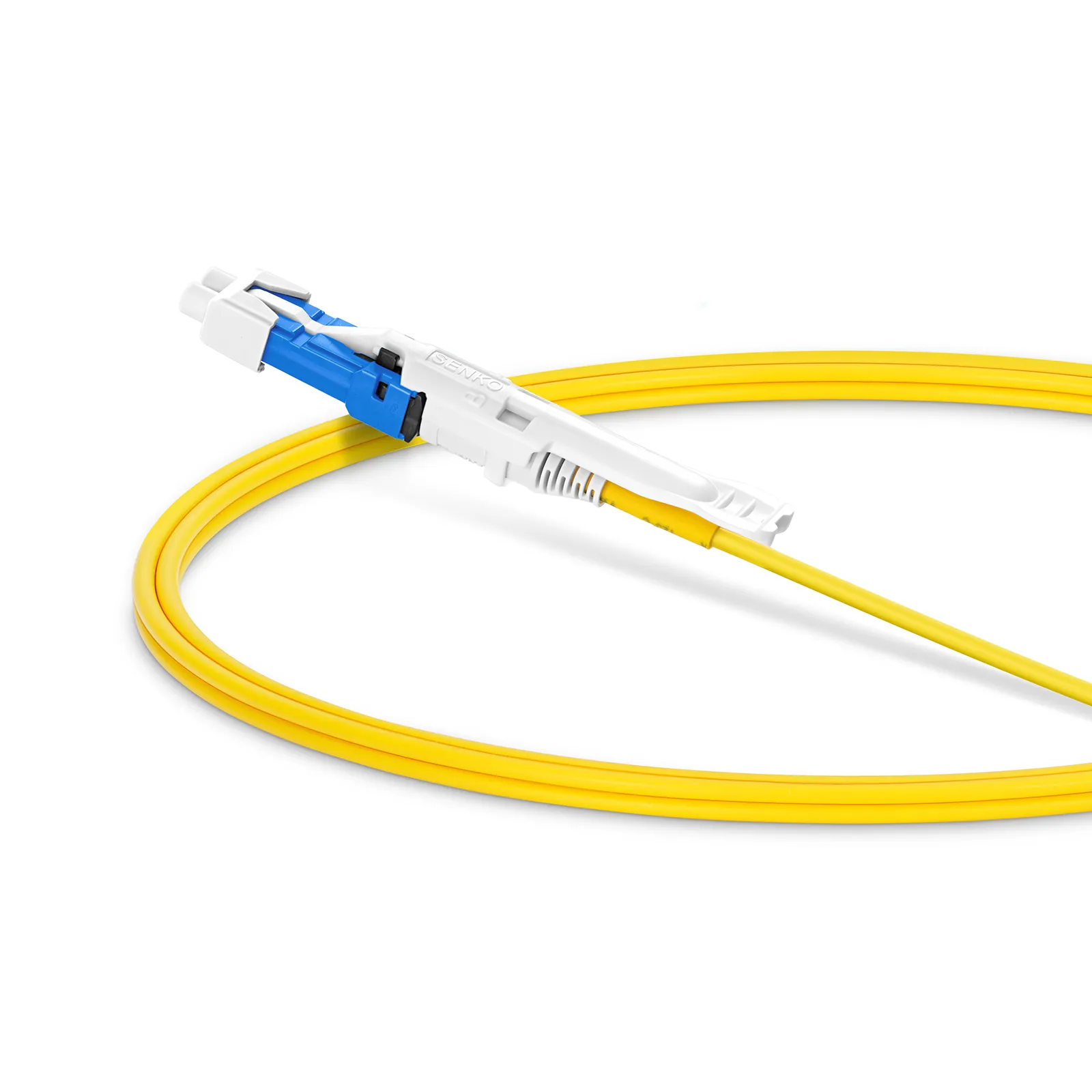
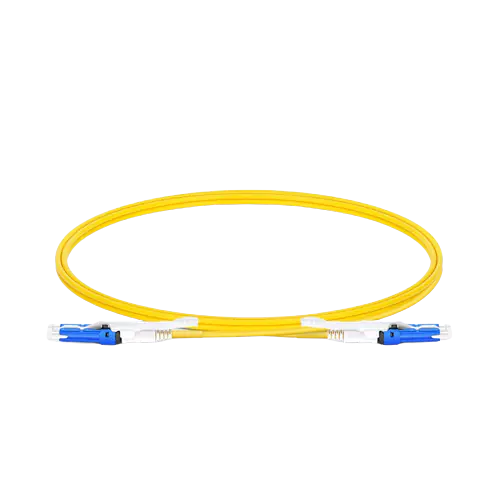
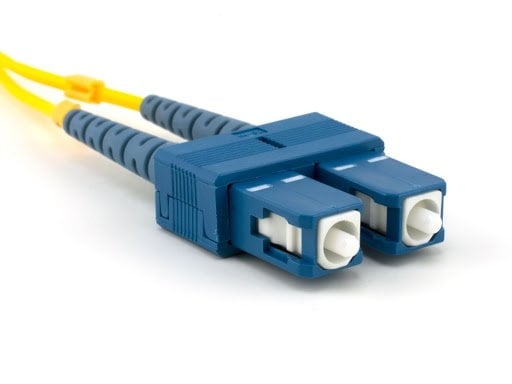
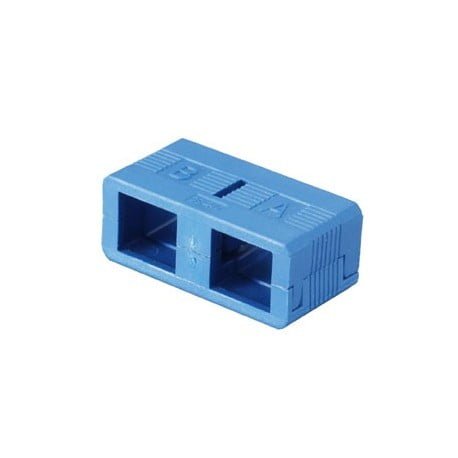
What is CS Fiber Optic Connector Patch Cable Assemble QSFP?
CS Fiber Optic Connector Patch Cable Assemble QSFP is specifically designed for Data Centre 400G optimization. To
accommodate the “lightspeed” upgrades currently taking place in hyperscale DCs, the reduced size CS Connector is
not only capable of delivering low insertion and high return loss comparable to existing LC connectors, but with
significantly reduced footprint.
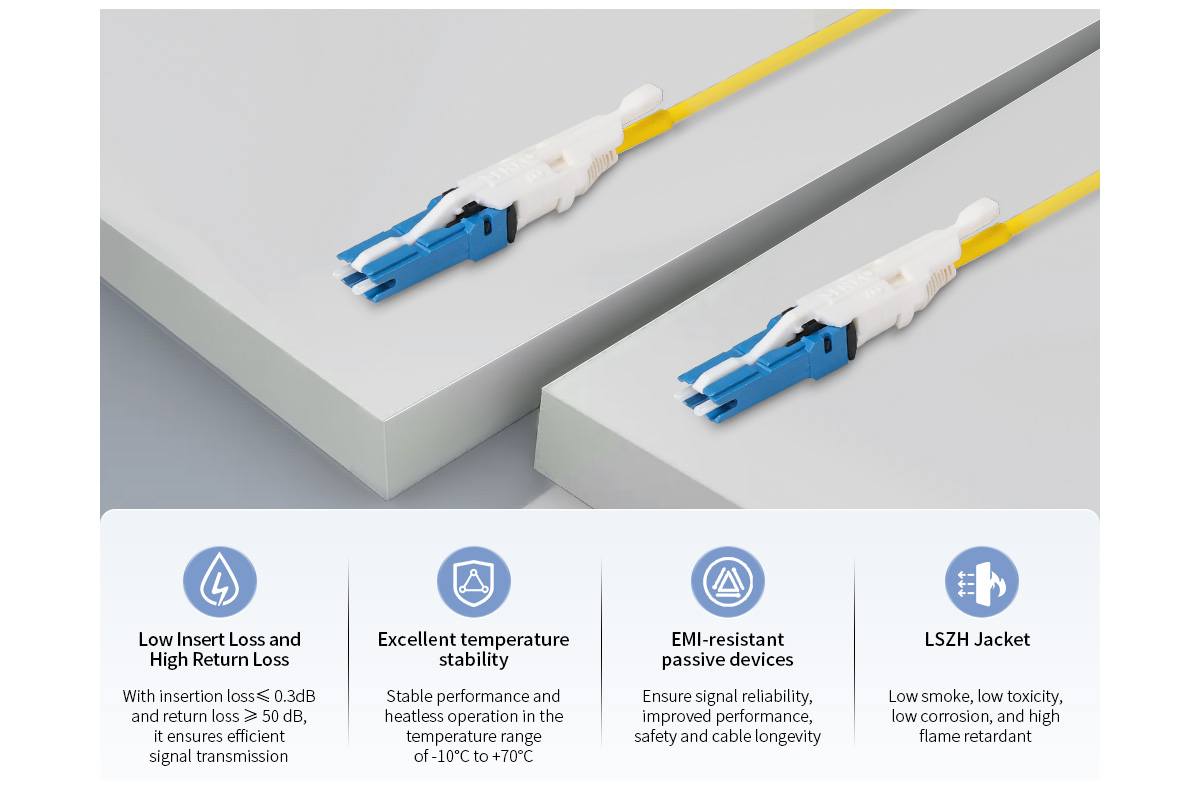
CS Fiber Connector Patch Cables. The CS Fiber Connector Patch Cables are an evolution in optical connectivity
where CS connectors feature a 40% size reduction when compared to LC duplex connectors at the same time
delivering increased performance.
The CS connector is a miniature single-position plug which is characterized by duo cylindrical, spring-loaded
butting ferrule(s) of a 1.25 mm typical diameter, and a push-pull coupling mechanism. The optical alignment
mechanism of the connectors is a rigid bore sleeve or a resilient sleeve.
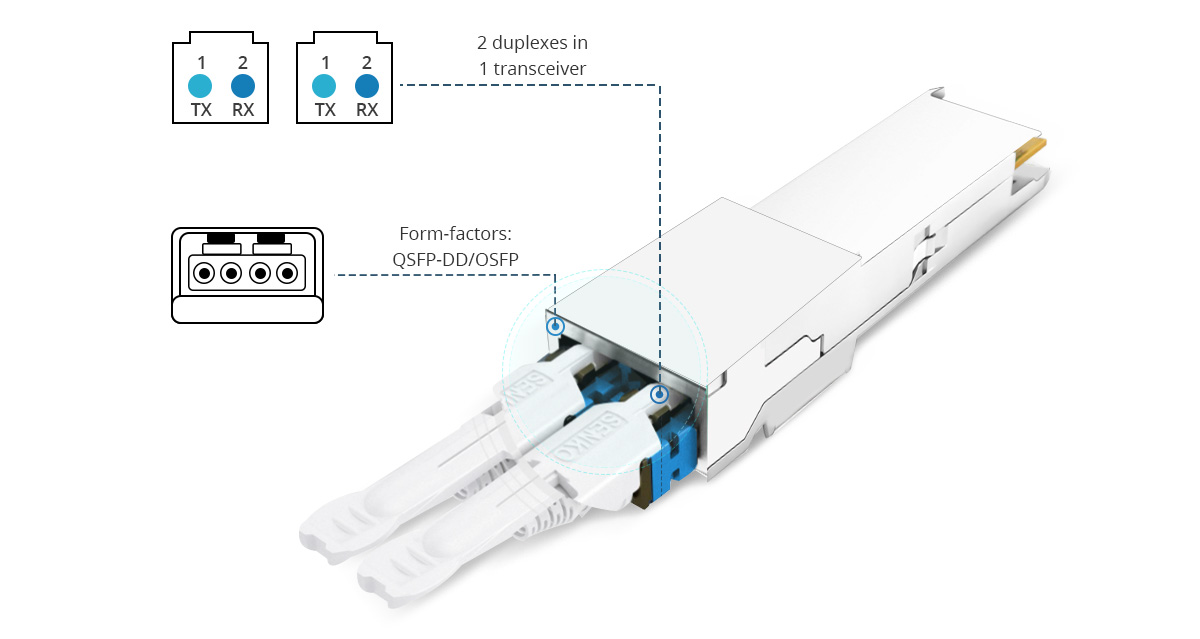
The CS connector meets the requirement for 2x100G/200G CWDM4 transceivers requiring two pairs of TX/RX. Our CS
Cable Assembly support next-generation 200/400 Gbps QSFP-DD and OSFP transceivers with optimized performance.
CS is a Very Small Form Factor (VSFF) connector and is ideal for space-saving solutions. The CS connector
allows you to double the density in patch panels compared to an LC duplex.
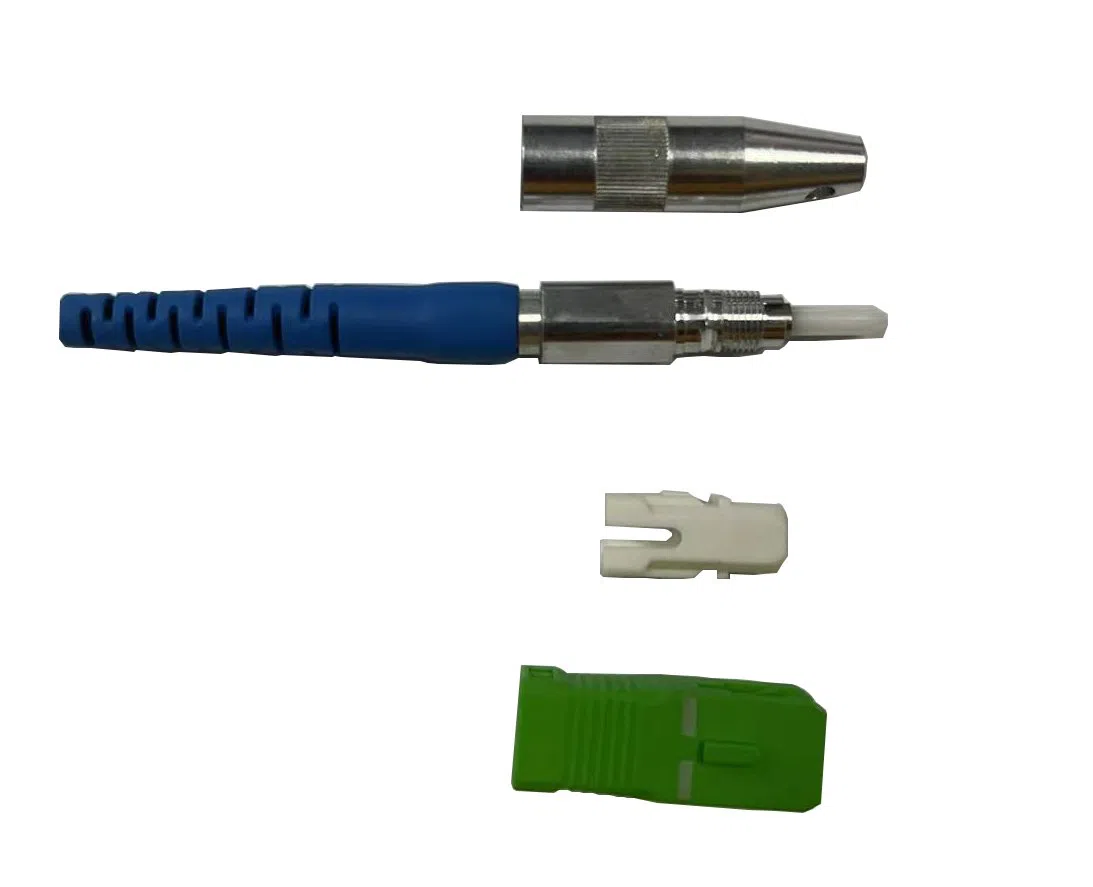
Through wall/conduit SC type connector is a new type of connector developed by Us. The end face of the pin mostly
adopts PC or APC type grinding method, and the fastening method adopts the plug-in latch type and rotates. This
type of connector is made of alloy material, which is easy to plug and unplug, with small fluctuation in
insertion loss, high compressive strength, high installation density, high temperature resistance, and not easy
to oxidize. Easy FTTH/conduit installation.
The CS Fiber Connector Patch Cables are available in OM3, OM4, and OM5 Multimode Fiber (MMF), as well as
Single-Mode Fiber (SMF) UPC and Single-Mode Fiber (SMF) APC variations. Connectors have two cylindrical,
spring-loaded 1.25mm ferrules similar to LC connectors, within a single housing, but the CS connector’s two
ferrules are pitched at 3.8mm apart (standard LC duplex ferrules are pitched 6.25mm apart), which is the minimum
possible spacing to meet the TOSA and ROSA optics requirement. Edge to edge size for CS connectors is 7.85mm,
while for standard LC duplex connectors it is 13mm.
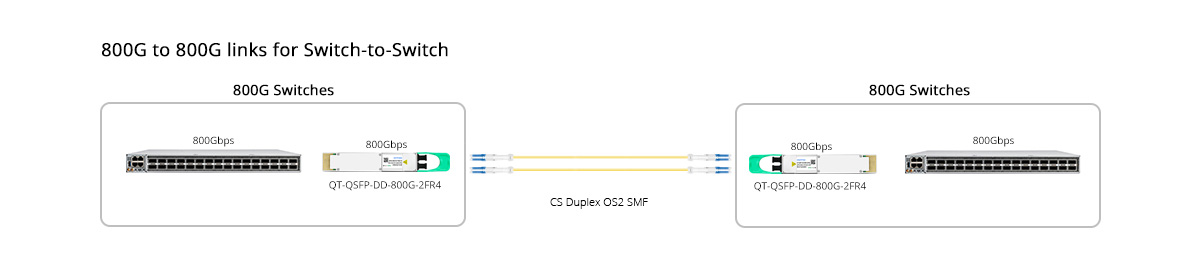
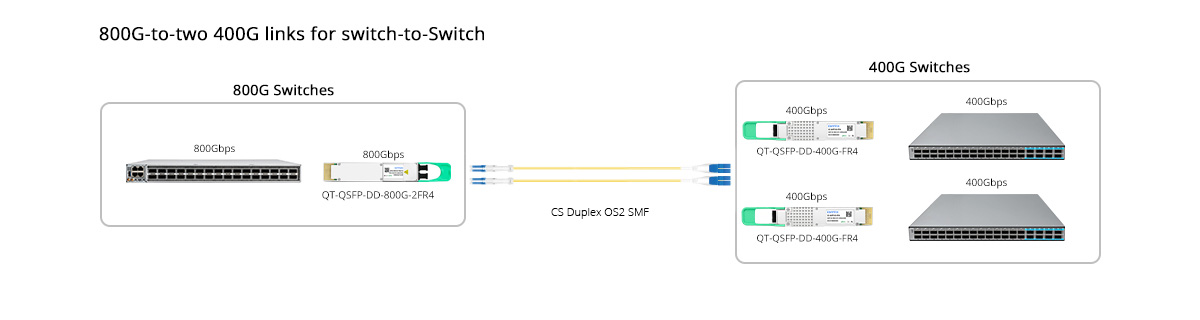
Some of the typical applications for CS Fiber Connector Patch Cables are in Data Center environment for patch
connections to aggregate multiple 200G FR4 signals 200G-QSFP56-2.1 from server side NIC (Network Interface
cards) towards 400G 2FR Data Center switch 400G-QSFP-DD-2.2, for such scenario CS-LC-OS2-UPC-DX-B CS patch cable
need to be used. Another typical scenario would be to interconnect 400G QSFP-DD PAM4 infrastructure with legacy
100G QSFP28 NRZ infrastructure. As QSFP-DD ports are backwards compatible with QSFP28 modules, we can use
2x100G-QDD-10 optical transceivers which support 2x100G Ethernet, NRZ modulation and have double CS connectors
and make interconnection to two 100G-QSFP28-10 transceivers in our 100G legacy infrastructure. For this
connection we need to use CS-LC-OS2-UPC-DX-B CS patch cable. Lastly another popular use case for CS patch cables
are 100G DWDM QSFP28 PAM4 scenario where we have special 100G DWDM QSFP28 transceivers (DWDM2-QSFP28-80) which
have 2 independent DWDM wavelength (Tx1/Tx2 and Rx1/Rx2) each working at 50G PAM4 rate and module has dual CS
connector. In this scenario we need to use CS-LC-OS2-UPC-DX-A CS patch cables.