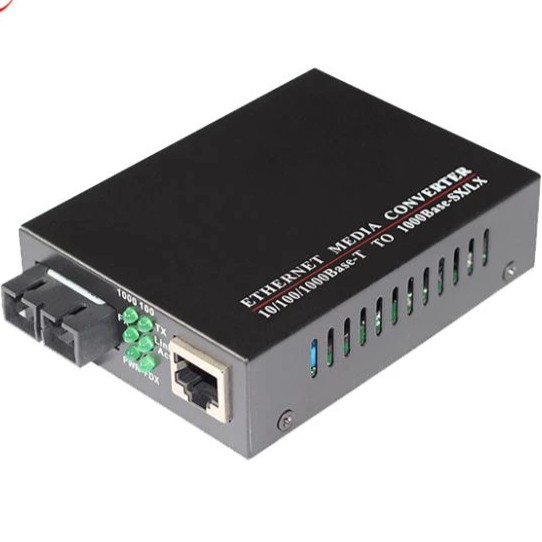
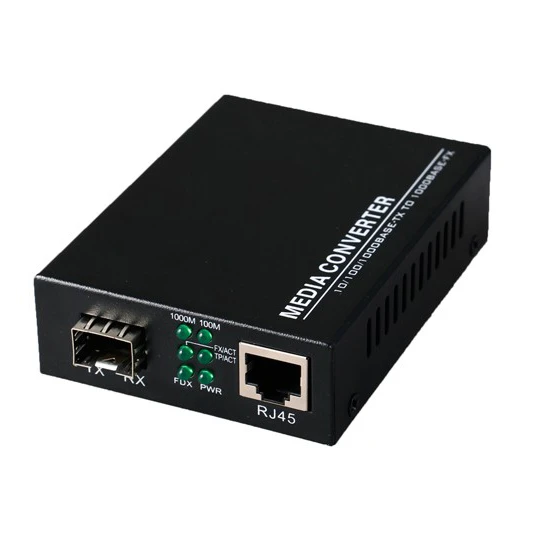
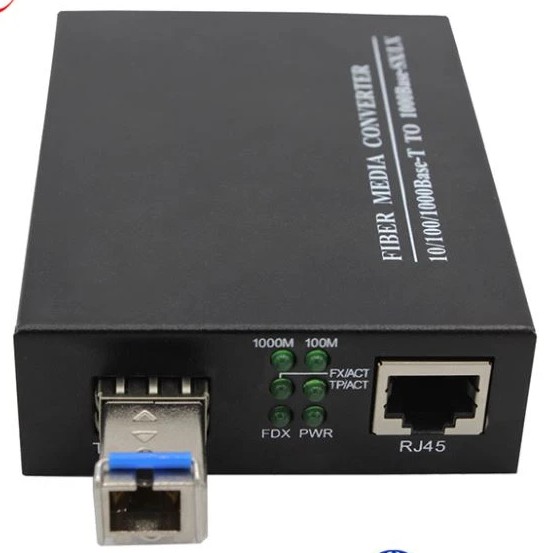
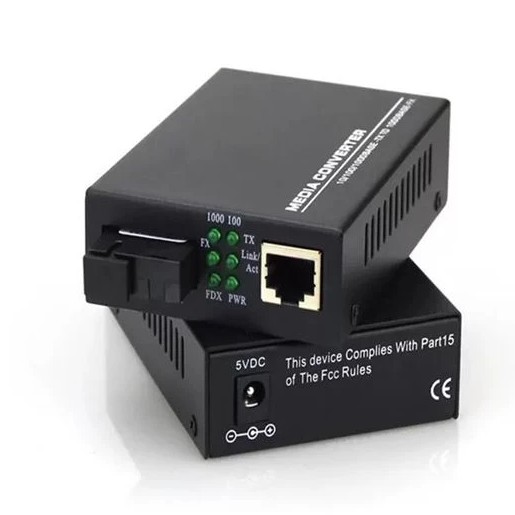
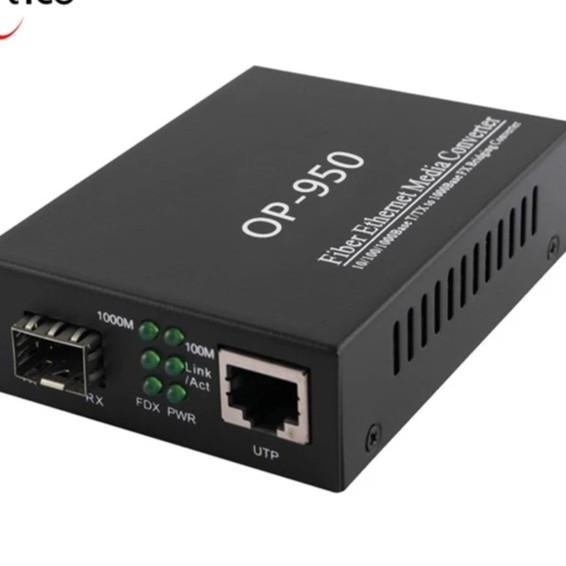
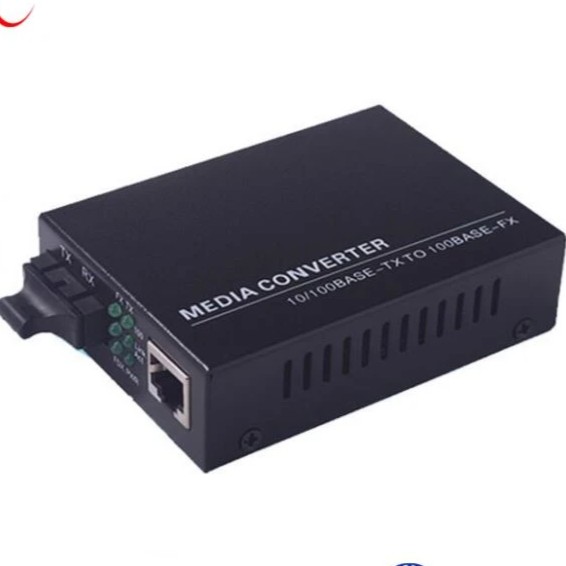
10/100/1000M Ethernet media converter adopts switching technology to fulfill media conversion. It complies with
IEEE802.3z and IEEE802.3ab standards, and supports two types of media network connections: 10/100/1000Base-T and
1000Base-SX/LX.
Shenzhen Optico Communication Co., Ltd. is one of the most credible manufacturers and suppliers of 100/1000m
media
converters 20km in China. Please feel free to wholesale high quality customized products at competitive price
form
our factory. If you have any enquiry about free sample, please feel free to email us.
Product Brief Introduction
10/100/1000M Ethernet media converter adopts switching technology to fulfill media conversion. It complies with
IEEE802.3z and IEEE802.3ab standards, and supports two types of media network connections: 10/100/1000Base-T and
1000Base-SX/LX. It inter-converts electrical signals of 10/100/1000Base-T twisted pairs with optical signals of
1000Base-SX, extending the transmission distance of a network from 100m via copper cables to 220m (fiber size:
62.5/125μm)/550m (fiber size:50/125μm) via fiber optical cables. It supports transmission in multi-mode dual
fiber;
single-mode dual fiber, single-mode single fiber.
switching technology to fulfill media conversion. It complies with IEEE802.3z and IEEE802.3ab standards, and
supports
two types of media network connections: 10/100/1000Base-T and 1000Base-SX/LX. It inter-converts electrical
signals
of 10/100/1000Base-T twisted pairs with optical signals of 1000Base-SX, extending the transmission distance of a
network from 100m via copper cables to 220m (fiber size: 62.5/125μm)/550m (fiber size:50/125μm) via fiber
optical
cables. It supports transmission in multi-mode dual fiber; single-mode dual fiber, single-mode single fiber.
Media Converter Main Feature:
Supporting inter-conversion between 10/100/1000Base-TXand 1000Base-SX
Supporting full-duplex and half-duplex and its auto-sensed
Supporting automatic cross connection of twisted pair interfaces, facilitating system commissioning and
installation
Supporting the transmission of extra-long VLAN packets
Supporting Quality ofService (QoS) and ensuring the transmission of VoIP packets
Supporting STP to form a redundant network
Technical
Parameter
Specification
Access mode
10/100/1000Mbps Gigabit Ethernet
Standard
IEEE802.3ab 1000Base-T , IEEE802.3z 1000Base-SX/LX Gigabit thernet,IEEE802.1qVLAN,IEEE802.1p
QoS,IEEE802.1d
Spanning Tree
One RJ45 connector:connected to STP/UTP category-5 twisted pair One fiber port: Multi-mode SC (fiber
size: 50,62.5/125µm) Single modeSC/FC(fiber size: 9/125µm)
Conversion means
Media conversion
Delay
<10us
BER
<10-9
MTBF
100,000 hours
LED
PWR(power supply), FX LINK (optical link action), TP LINK1000 (twisted pair link1000M), TP LINK100
(twisted
pair link100M), TP ACT (twisted pair packet forwarding)
The transmission media adopts CAT5 twisted-pair with typical length of 100 meter. It features the function of
automatically identifying the through line and cross wire
Fiber interface
SC/ST fiber interface is of duplex mode type, including two interfaces, namely TX and RX. When the two sets of
optical transceiver are interfaced or connected to switch with fiber interface, the fiber is in cross
connection,
namely "TX-RX", "RX-TX" (direct butting for single optical fiber).
2. Connection
The network device(work station, hub or switch) with RJ-45 interface is connected to RJ-45 jack of optical
transceiver through twisted-pair. And the multi/single mode fiber is connected to SC/ST fiber interface of the
optical transceiver. Thenswitchon. The corresponding LED is on for correct connection. (See the table below for
the
LED indicatorlamp)
Cautions for Media Converter:
This product is suitable for indoor application.
Put on the dust cover of fiber interface when not used.
It is forbidden to stare at the TX fiber-transferend with naked eyes.
Single optical fiber transceiver must be used in pair (See the attachment description in delivery).
Troubles Shooting:
Device is not matched. Please select the corresponding network device according to the transferrate of the
product (10Mbps or 100Mbpsor 1000Mbps) when connected to other network devices (network card, hub, switch).
Line loss is excessive during the fiber wiring. Excessive loss in connector plug-in and fiber soldering
welding,
and excessive intermediate nodes may cause excessive loss rate or abnormal operation.